Possession or Zip
Piaget · Van Cleef & Arpels
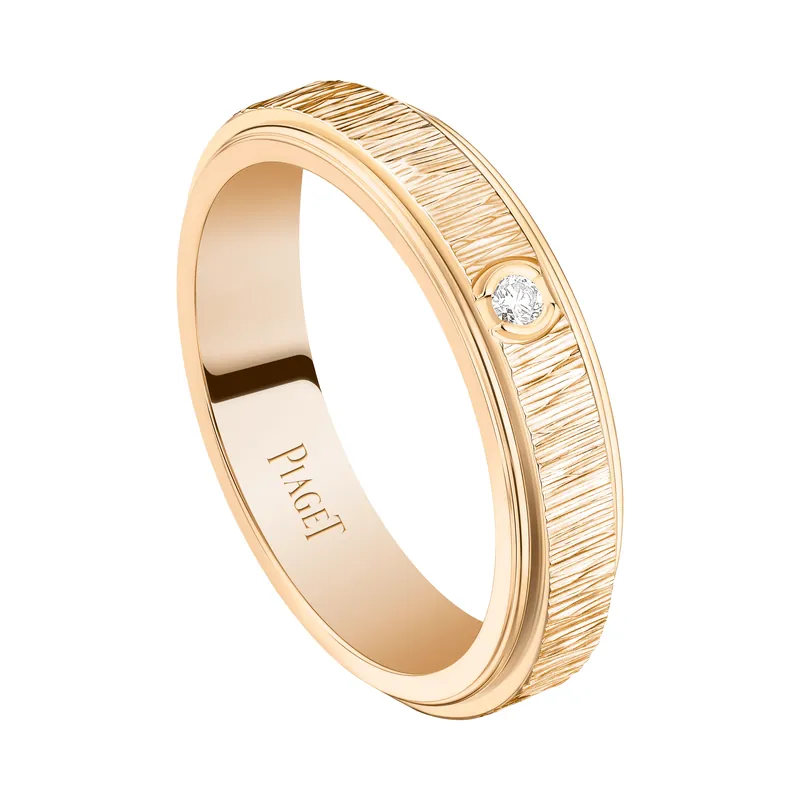
One moving part runs the length of a necklace; the other circles a finger. Van Cleef & Arpels had a jewelry zip patented in 1938, after the Duchess of Windsor's suggestion, and spent twelve years reaching the first necklace in 1950; a pull of the tassel turns it into a bracelet. Piaget's Possession, from 1990, is a smaller motion repeated all day: a second band turning freely around the first, credited to Yves G. Piaget and later chased with the Decor Palace texture of the house's watch dials.
| Fact | Possession | Zip |
|---|---|---|
| Introduced | 1990 | 1950 |
| Designer | Yves G. Piaget | Renée Puissant |
| School | Geneva | Place Vendôme |
| Materials | rose gold, white gold, diamond, malachite, carnelian, turquoise, mother-of-pearl, tsavorite, ceramic, other | yellow gold, white gold, rose gold, diamond, ruby, sapphire |
| Moves | rotates | slides, opens |
| From | €1,890 | Not published |
| Top of line | €96,000 | — |
Prices in euros as published by each house, October 2026.
More with Possession
- Possession or Happy Diamonds Chopard
- Possession or Move Messika
- Possession or Happy Hearts Chopard
- Possession or Roulette Boodles
More with Zip
- Zip or Happy Diamonds Chopard
- Zip or Move Messika
- Zip or Happy Hearts Chopard
- Zip or Roulette Boodles