The moving element
Same idea, six houses.
Also touching the moving element
Lineage
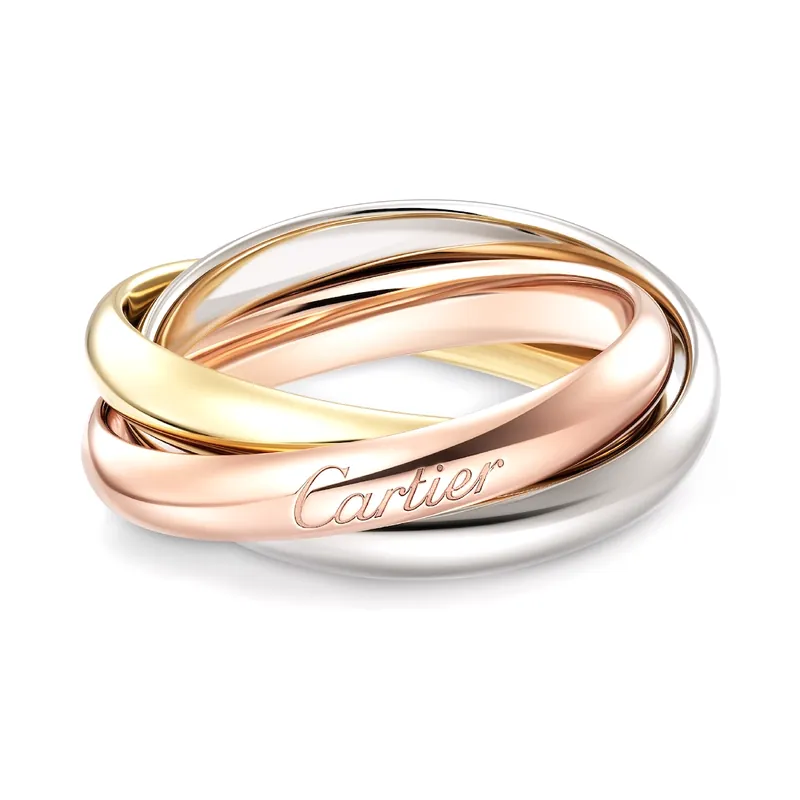
- 1924 Trinity Cartier
- 1950 Zip Van Cleef & Arpels
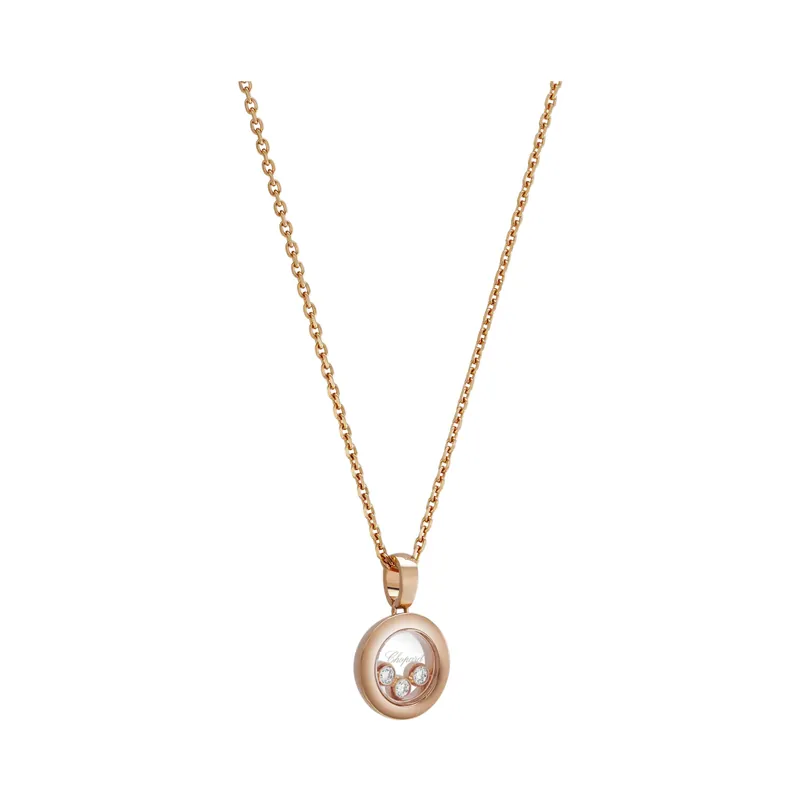
- 1976 Happy Diamonds Chopard
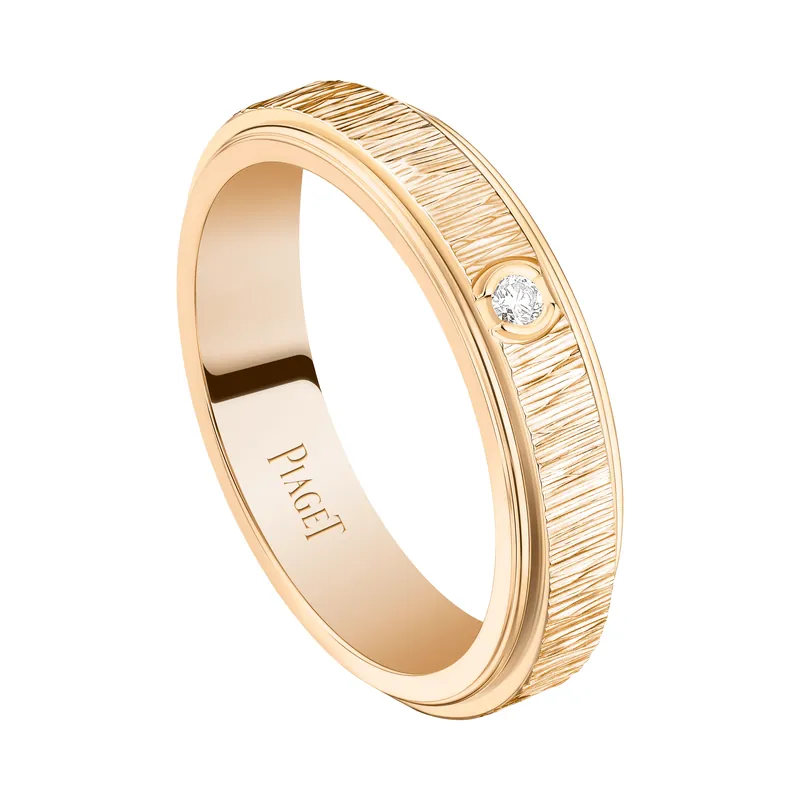
- 1990 Possession Piaget
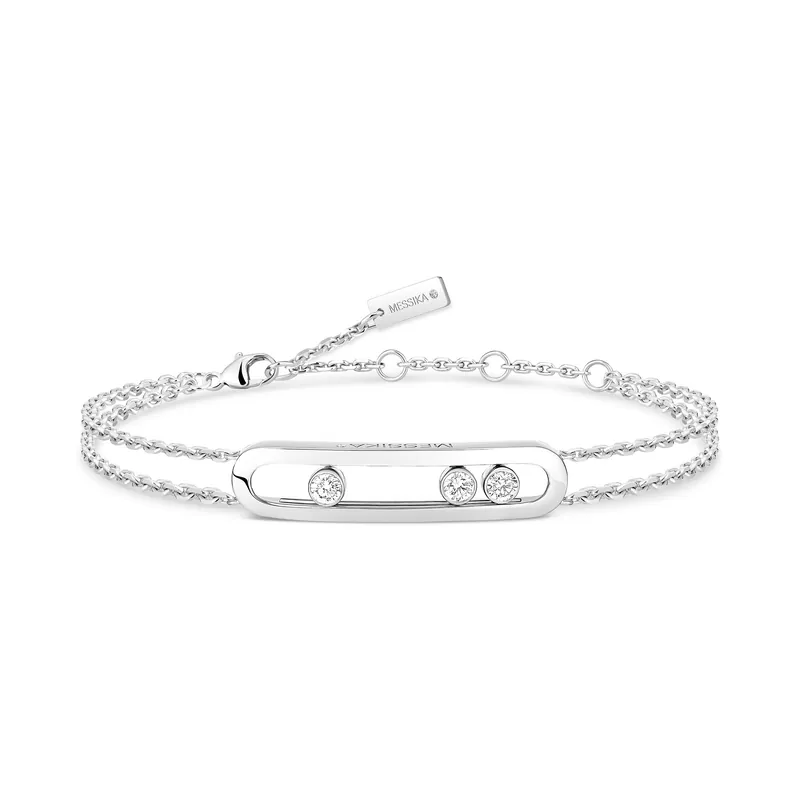
- 2007 Move Messika
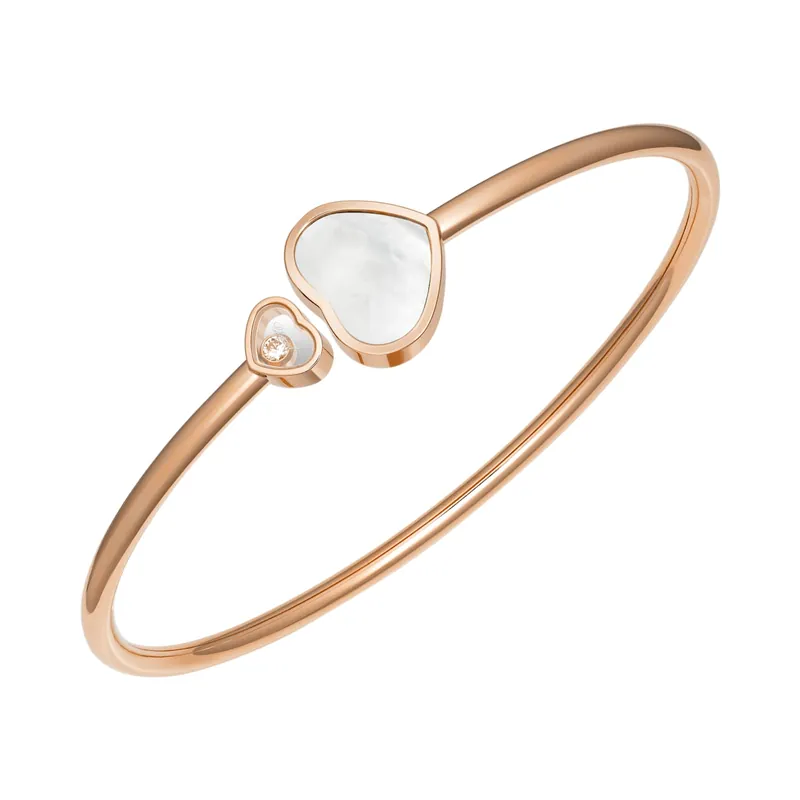
- 2009 Happy Hearts Chopard
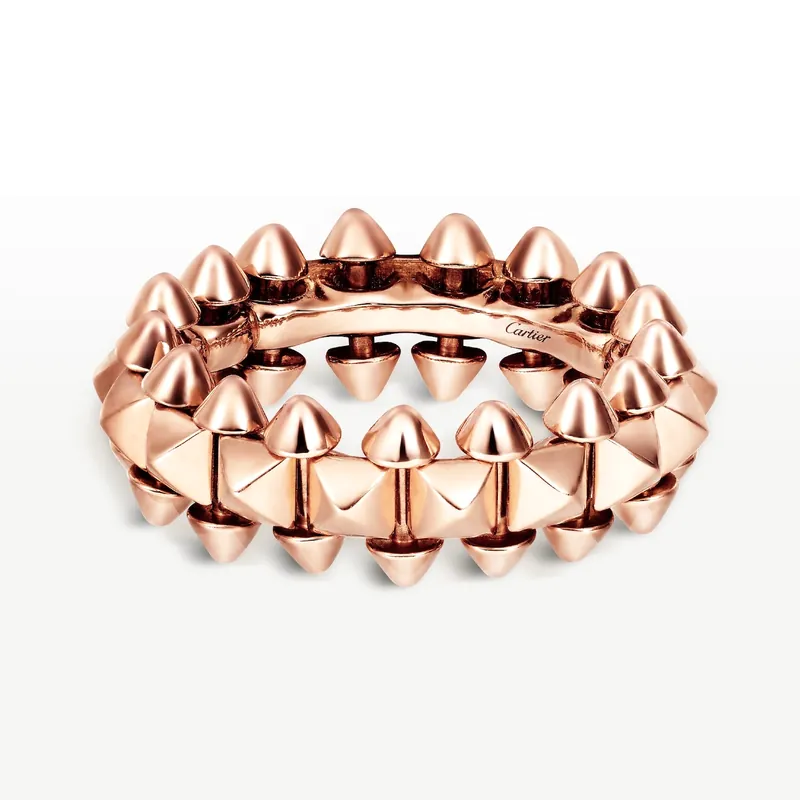
- 2019 Clash de Cartier Cartier
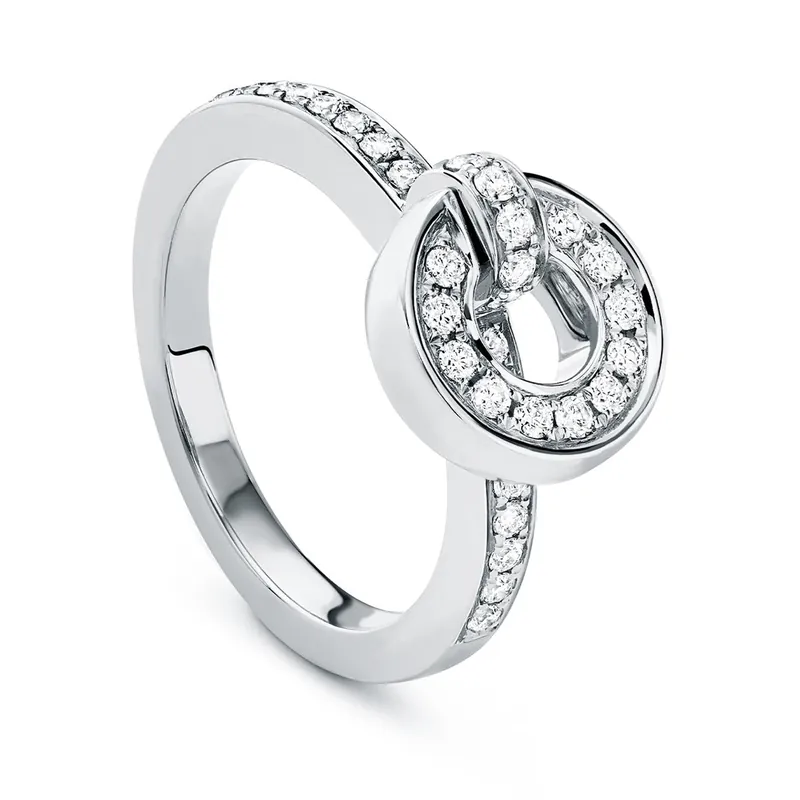
Roulette answers Possession
Boodles takes the ring you turn and makes it flip: a circle of diamonds swivels on the band to show its other face.
Possession answers Trinity · 1990
Trinity's bands roll over one another; Possession gives a ring a second band that spins freely round it.
Move answers Happy Diamonds · 2007
Move takes the loose diamond out from under glass and lets it travel along an open gold cage.
Happy Hearts answers Happy Diamonds · 2009
Happy Hearts puts the loose diamond inside an open gold heart and pairs it with a solid heart of coloured stone.
Where it came from
Most jewelry holds still. This family does not, and its oldest member is very nearly a machine. The zip fastener was new to couture in the late 1930s when the Duchess of Windsor suggested a jewel based on one; Renée Puissant, artistic director of Van Cleef & Arpels, had a jewelled zip patented in 1938, and more than ten years of engineering passed before the first necklace left the workshops in 1950. Pull its tassel and it closes into a bracelet.
Geneva set stones free. In 1976 Chopard let diamonds float loose behind sapphire glass on a watch, the start of a line it calls Happy Diamonds and traces to sunlight in the mist of a Black Forest waterfall. Valérie Messika carried the floating diamond onto the wrist in 2007: Move, three stones sliding in an open gold cage, came from a childhood memory of her father passing diamonds between his fingers. Smaller motions run through the other houses. The sugarloaf cabochons of FRED's Pain de Sucre click in and out of their mounts, Piaget's Possession ring turns on its axis under the thumb, and the two ends of Boucheron's Jack snap together like a plug into its socket.
Side by side
- Happy Diamonds or Zip Chopard · Van Cleef & Arpels
- Possession or Zip Piaget · Van Cleef & Arpels
- Move or Zip Messika · Van Cleef & Arpels
- Happy Hearts or Zip Chopard · Van Cleef & Arpels
- Roulette or Zip Boodles · Van Cleef & Arpels
- Happy Diamonds or Possession Chopard · Piaget
- Happy Diamonds or Move Chopard · Messika
- Roulette or Happy Diamonds Boodles · Chopard
- Move or Possession Messika · Piaget
- Happy Hearts or Possession Chopard · Piaget
- Roulette or Possession Boodles · Piaget
- Happy Hearts or Move Chopard · Messika
- Roulette or Move Boodles · Messika
- Roulette or Happy Hearts Boodles · Chopard