Tulle or Belle Époque
Buccellati · Damiani
Tulle
A half-millimetre sheet of gold pierced by hand into hundreds of minute hexagonal cells, so the metal reads like net lace.
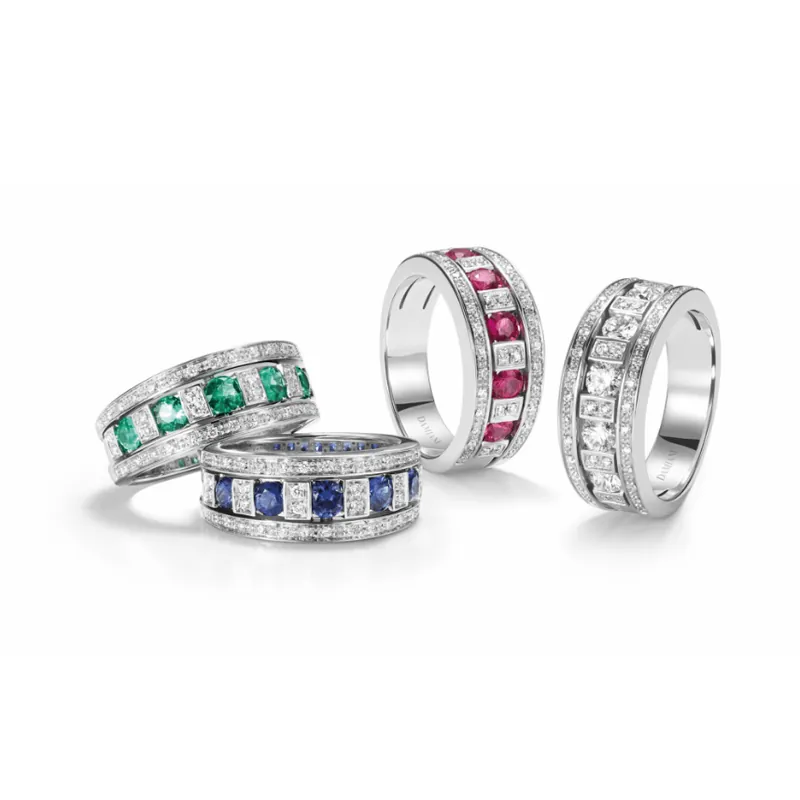
Belle Époque
Round diamonds alternating with rubies, sapphires or emeralds round a band, like frames on a reel of film running past.
Buccellati was founded in 1919 and Damiani in 1924, and the 1920s mark both these lines. Mario Buccellati developed the openwork of Tulle in that decade, sawing gold sheet into hexagons after Venetian lace. Belle Époque pays tribute to the Paris of the same years and its screen muses, with diamonds and coloured stones alternating round a band. Buccellati found the decade in a technique; Damiani found it in a mood, sketched after a trip to Paris.
| Fact | Tulle | Belle Époque |
|---|---|---|
| Designer | Mario Buccellati | Enrico Grassi Damiani (original sketches) |
| School | Milan & Valenza | Milan & Valenza |
| Materials | yellow gold, white gold, diamond | white gold, rose gold, yellow gold, diamond, ruby, sapphire, emerald |
| Moves | No | No |
| From | Not published | Not published |
Prices in euros as published by each house, October 2026.
More with Tulle
- Tulle or Tubogas Bulgari
- Tulle or Elsa Peretti Bone Cuff Tiffany & Co.
- Tulle or The Cable Collection David Yurman
- Tulle or B.zero1 Bulgari
More with Belle Époque
- Belle Époque or Tubogas Bulgari
- Belle Époque or Elsa Peretti Bone Cuff Tiffany & Co.
- Belle Époque or The Cable Collection David Yurman
- Belle Époque or B.zero1 Bulgari