The pearl
Same idea, two houses.
Also touching the pearl
Lineage
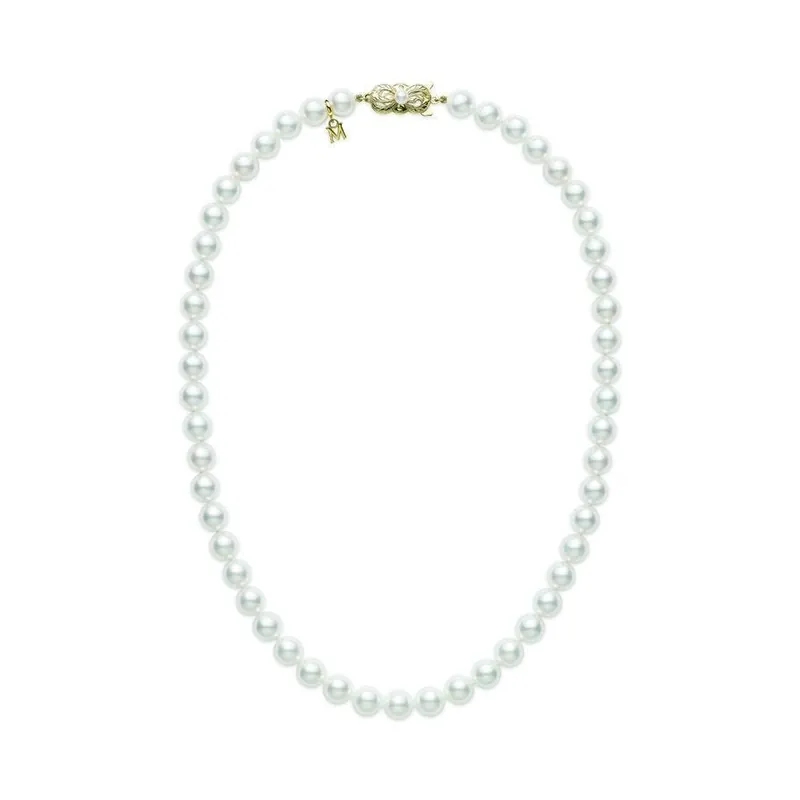
- 1893 Akoya Cultured Pearl Strand MIKIMOTO
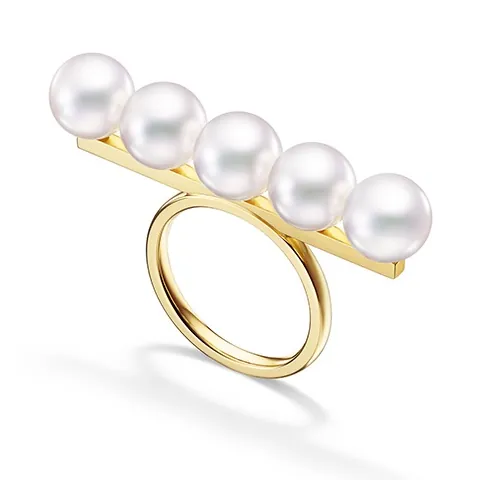
- 2010 balance TASAKI
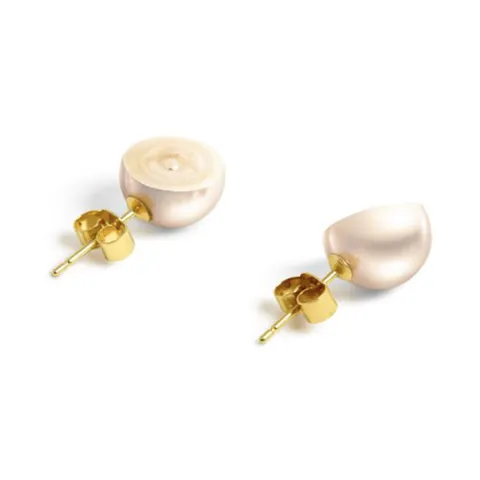
- 2012 M/G TASAKI TASAKI
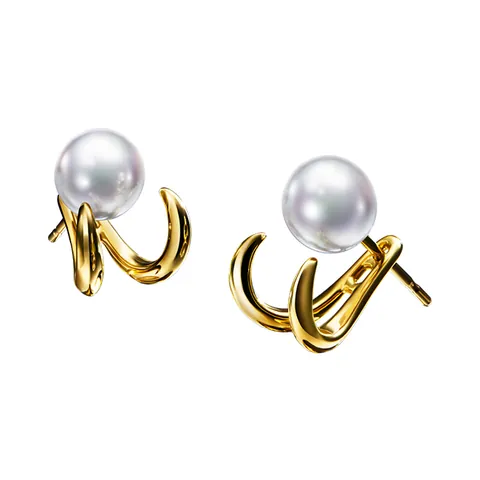
danger answers Akoya Cultured Pearl Strand
Danger gives the most polite gem in the case fangs, horns and claws of gold.
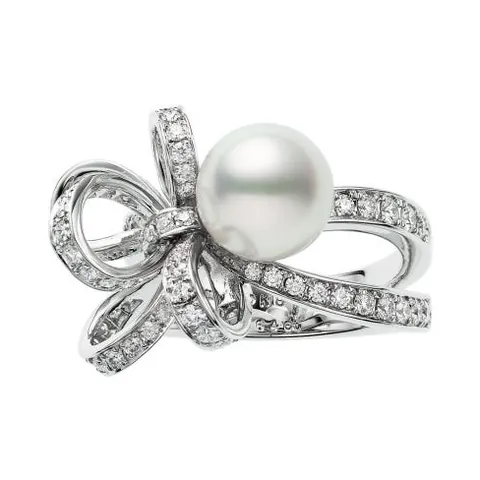
Jeux de Rubans answers Akoya Cultured Pearl Strand
Mikimoto ties ribbons of pavé behind a single Akoya, as if the pearl had just been wrapped as a present.
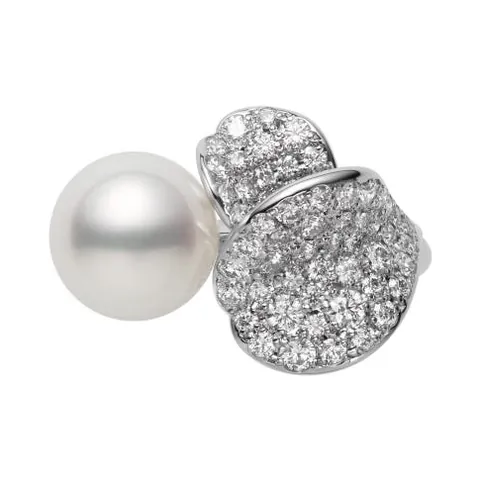
Les Pétales Place Vendôme answers Akoya Cultured Pearl Strand
Cupped petals of pavé drift against a round pearl, as if blown across the Place Vendôme.
balance answers Akoya Cultured Pearl Strand · 2010
Balance takes the matched Akoya of the strand and lines them up on a straight gold bar, level as a spirit gauge.
M/G TASAKI answers Akoya Cultured Pearl Strand · 2012
M/G TASAKI slices the round pearl open, so the banded inside that the perfect strand hides becomes the ornament.
Where it came from
On 11 July 1893, in the Shinmei inlet of Ago Bay, Kokichi Mikimoto found what years of failure and near bankruptcy had denied him: pearls grown by his own oysters, though only half-round ones. He patented the method in 1896 and opened a shop in Ginza in 1899, selling seed pearls and half-pearls. Fully round pearls took him roughly another dozen years, and harvests that could be sold in quantity came only in the 1920s.
Until then a pearl was something found, and it was priced as a rarity. In July 1917 Louis and Pierre Cartier bought the Plant mansion on Fifth Avenue for $100 in cash and a double strand of 128 matched natural pearls, then valued at a million dollars; Mae Plant had admired the necklace in the window of Cartier's shop a few blocks away. Cultured pearls brought natural ones down, and by the time she died in 1956 the strands were valued at $151,000. Mikimoto spent years answering charges that his pearls were imitations, and in the 1930s, with oversupply pulling prices down, he publicly burned low-grade pearls to show what his name would not stand for.
Once the pearl was no longer rare, designers could treat it lightly. Jean Dinh Van, newly independent in the 1960s, set two pearls face to face on a ring for Pierre Cardin, and the Menottes he drew in 1976 still come on a strand of Akoya pearls. Tiffany has added pearl accents to the gauge links of HardWear. The Tokyo houses mostly keep to the strand, the bar and the single drop, and count the space around a pearl as part of the jewel.
Side by side
- Akoya Cultured Pearl Strand or balance MIKIMOTO · TASAKI
- Akoya Cultured Pearl Strand or M/G TASAKI MIKIMOTO · TASAKI
- Akoya Cultured Pearl Strand or danger MIKIMOTO · TASAKI