Cartier Destinée or The Tiffany Setting
Cartier · Tiffany & Co.
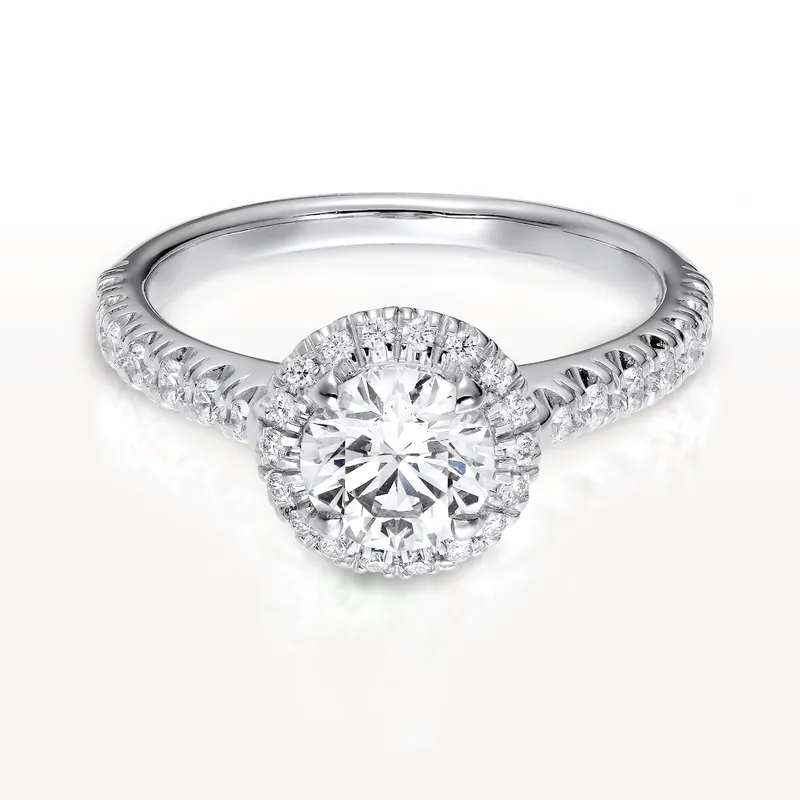
Cartier Destinée
A solitaire circled by a halo of small diamonds set so lightly that they seem to float free of the metal.
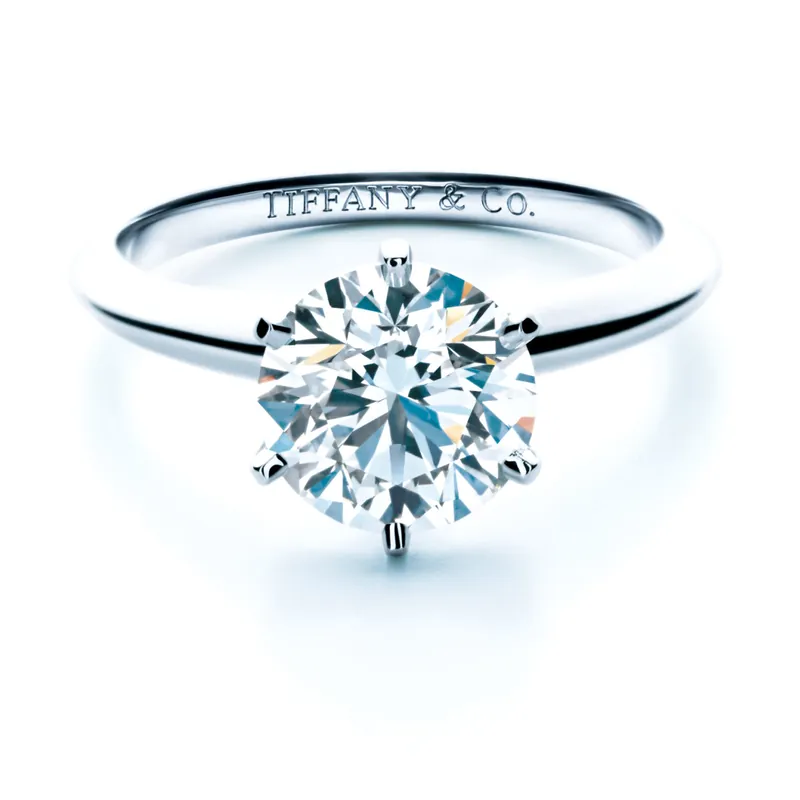
The Tiffany Setting
Six slender prongs lift a round brilliant diamond clear of the band, so the stone, not the mount, carries the ring.
Halo or bare prongs: these two rings take the two routes cleanly. Cartier's Destinée circles a brilliant, pear, oval or emerald-cut diamond, or an oval emerald, with small diamonds set so lightly they seem to float free of the metal. The Tiffany Setting, introduced in 1886, leaves the round brilliant alone on six prongs, raised above the band so light can reach it from every side. Both rings aim at brightness, by routes that run in opposite directions.
| Fact | Cartier Destinée | The Tiffany Setting |
|---|---|---|
| Introduced | — | 1886 |
| Designer | — | Charles Lewis Tiffany |
| School | Place Vendôme | New York |
| Materials | platinum, yellow gold, rose gold, diamond, emerald | platinum, diamond |
| Moves | No | No |
| From | Not published | Not published |
Prices in euros as published by each house, October 2026.